
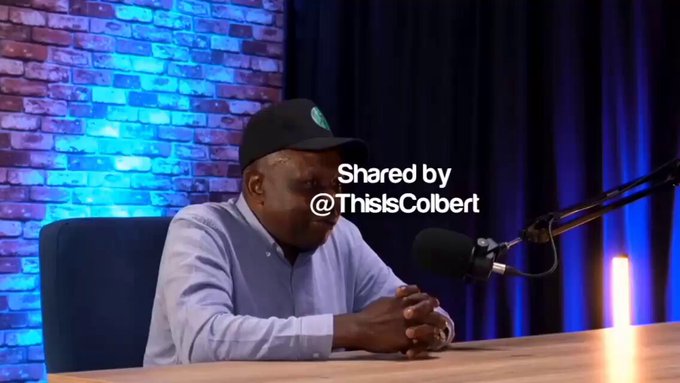
The recent statement by Judge Hlophe, calling out President Cyril Ramaphosa in a manner both calm and vividly detailed, has caught the attention of many South Africans. This moment, shared widely on social media by voices like YaseBlock B (@ThisIsColbert), marks a significant moment in our ongoing political discourse—one that demands thoughtful reflection and analysis.
### Judge Hlophe’s Commanding Presence
Judge Hlophe, known for his formidable role in the judiciary, stepped into the public eye with a measured and composed demeanor as he delivered his critique. Unlike the often heated rhetoric typical in political confrontations, this approach brought a new gravity, painting a clear picture that resonated widely. His calmness contrasted sharply with the seriousness of his message, compelling audiences to absorb the weight of his words without distraction.
This style not only highlighted his personal strength and credibility, but also made his concerns about President Ramaphosa’s leadership harder to dismiss. When voices from the judiciary present their observations, it pierces through the usual political noise, reminding us of accountability and the need for transparency at the highest levels of government.
### Unpacking the Allegations Against President Ramaphosa
While specific details of Judge Hlophe’s critique delve into layers of political controversy, the core theme centers on dissatisfaction with the current administration’s handling of governance, economic challenges, and promises made to South Africans. This is a discourse on the gap between leadership rhetoric and tangible outcomes, a point of frustration for many citizens.
The critique provides a vivid picture of what some see as leadership failures: unfulfilled promises, stalled reforms, and a disconnect between the corridors of power and the everyday realities of citizens struggling with unemployment, inequality, and service delivery challenges.
This exposes a broader concern across the nation—how can leadership be reoriented towards more effective, accountable governance? The emphasis from Judge Hlophe pushes this question to the forefront, demanding not just political debate but actionable change.
### The Role of the Incoming Mayor of Johannesburg
Amidst this political storm, the mention of the incoming Mayor of Johannesburg, affectionately referred to as “Gogo,” adds an intriguing layer to the narrative. Johannesburg, as the economic heart of South Africa, plays a pivotal role in the nation’s future. The leadership within the city’s government holds immense responsibility for addressing local challenges such as infrastructure decay, housing shortages, and social unrest.
“Gogo” represents a new chapter and possibly a counterpoint to national leadership struggles. The focus on her arrival reminds us that local governance is equally critical and that transformative leadership can begin at the city level, impacting millions directly.
Her role offers a beacon of hope that with the right vision and commitment at municipal levels, places like Joburg can become models of effective governance and service delivery, setting examples for the rest of the country.
### Public Reaction and Engagement
The social media buzz generated by these events underscores the growing importance of digital platforms in shaping public opinion. As thousands engage with Judge Hlophe’s remarks and discussions about President Ramaphosa’s leadership, there is a newfound urgency in citizens’ voices.
This dynamic illustrates how social media shapes political discourse today—from rapid sharing to in-depth debates, these platforms democratize conversations that were once limited to traditional media gatekeepers. South Africans are no longer passive observers; they are active participants demanding accountability and pushing for leadership that delivers results.
### Broader Implications for South Africa’s Democracy
Judge Hlophe’s critique and the public response highlight essential issues within South Africa’s democratic journey. As the country navigates challenges stemming from historical inequalities, economic crises, and political factionalism, the call for integrity, transparency, and effective governance grows louder.
It is a reminder that the strength of any democracy rests on robust institutions, accountable leaders, and active citizenry. When judicial voices contribute meaningfully to political discourse, it reflects a healthy tension necessary for democracy to thrive.
Furthermore, the local leadership transition in Johannesburg symbolizes the potential ripple effects of change beyond national politics, reinforcing the idea that democracy is lived and experienced from the grassroots up.
### Looking Forward: What Can South Africans Expect?
In this pivotal moment, various possibilities unfold:
– President Ramaphosa faces intensified scrutiny and pressure to address concerns raised by prominent figures like Judge Hlophe. This could lead to renewed efforts for policy reforms and leadership recalibration.
– The incoming Mayor of Joburg carries the hopes of many for tangible improvements within the city, setting a tone for what proactive leadership looks like at the municipal level.
– Citizens are increasingly empowered to hold leaders accountable through social media engagement, public forums, and voting power in upcoming elections.
This scenario is an invitation for deeper reflection on the political landscape and the role everyone must play in shaping South Africa’s future. It demands not only critique but also constructive dialogue and collaboration among leaders and the public alike.