
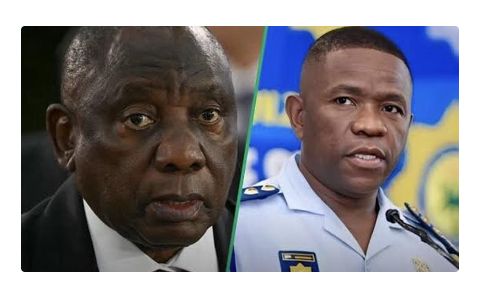
The African National Congress (ANC) leadership has finally responded after a recent media storm centered on President Cyril Ramaphosa and the alleged call for him to fire KwaZulu-Natal Police Commissioner Lieutenant-General Nhlanhla Mkhwanazi. The controversy began when Mkhwanazi publicly accused high-ranking politicians, including Police Minister Senzo Mchunu, of interfering in sensitive investigations and colluding with criminal syndicates. These explosive claims prompted immediate public outcry and intense scrutiny of the ANC’s commitment to tackling corruption and organized crime within South Africa’s law enforcement agencies.
In response, President Ramaphosa addressed the nation, acknowledging the gravity of Mkhwanazi’s allegations and announcing the establishment of a judicial commission of inquiry to fully investigate the accusations. Instead of dismissing Mkhwanazi, Ramaphosa opted to place Police Minister Senzo Mchunu on special leave pending the outcome of the inquiry, and appointed an acting police minister to temporarily fill the role. The ANC leadership echoed the president’s call for due process, emphasizing that immediate punitive measures against individuals accused in the report, without a thorough investigation, would be premature and risk undermining the rule of law.
The ANC’s stance has not quelled all criticism. Some political observers and opposition figures see the move as an attempt to deflect pressure and delay accountability, expressing skepticism given the country’s history of judicial commissions that fail to lead to prosecutions. Nonetheless, the decision signals both the turbulence at the heart of South Africa’s leadership and the ANC’s cautious, process-oriented approach to a crisis with profound implications for national security and public trust